


MYOFUNCTIONAL THERAPY
Retraining Your Oral Muscles for Better Breathing, Sleep, and Living
Specialized therapy designed to help children and adults restore natural tongue posture, nasal breathing, and optimal jaw function.
How Myofunctional Therapy Helps You Be Your B.E.S.T
Breathe
The way we breathe is fundamental to our whole-body wellness, and the tongue’s resting position plays a critical role in this process. Proper tongue posture can support nasal breathing, reduce the risk of sleep-disordered breathing, and promote better digestion and speech clarity.
Eat
There is an optimal way to chew, eat, and swallow. Some children are labeled as “picky eaters” and refuse to eat certain foods, are slow/ messy eaters, or have known feeding disorders. Adults who experience choking, notice they need to breathe between bites with their mouth, are “slow” or “fast” eaters, have jaw popping/ clicking or pain while eating, or digestive issues, may benefit from myofunctional therapy.
Sleep
Quality sleep is essential to LIFE. When we breathe through our mouth, snore, toss and turn, wake frequently, and/ or are always tired, this may be indicative of some other underlying health issue.
Talk
The way we communicate separates us from all other mammals. The way we communicate and “talk” plays a big role in social situations, academics, relationships, jobs, and every human interaction. This can include how we say certain sounds, but can also be the way we form thoughts/ ideas and the way we talk. Is there jaw pain when talking? Is it effortful? Any concerns with communication in general?

For Pediatrics & Kids (Ages 5+)
Building a Strong Foundation for Healthy Growth
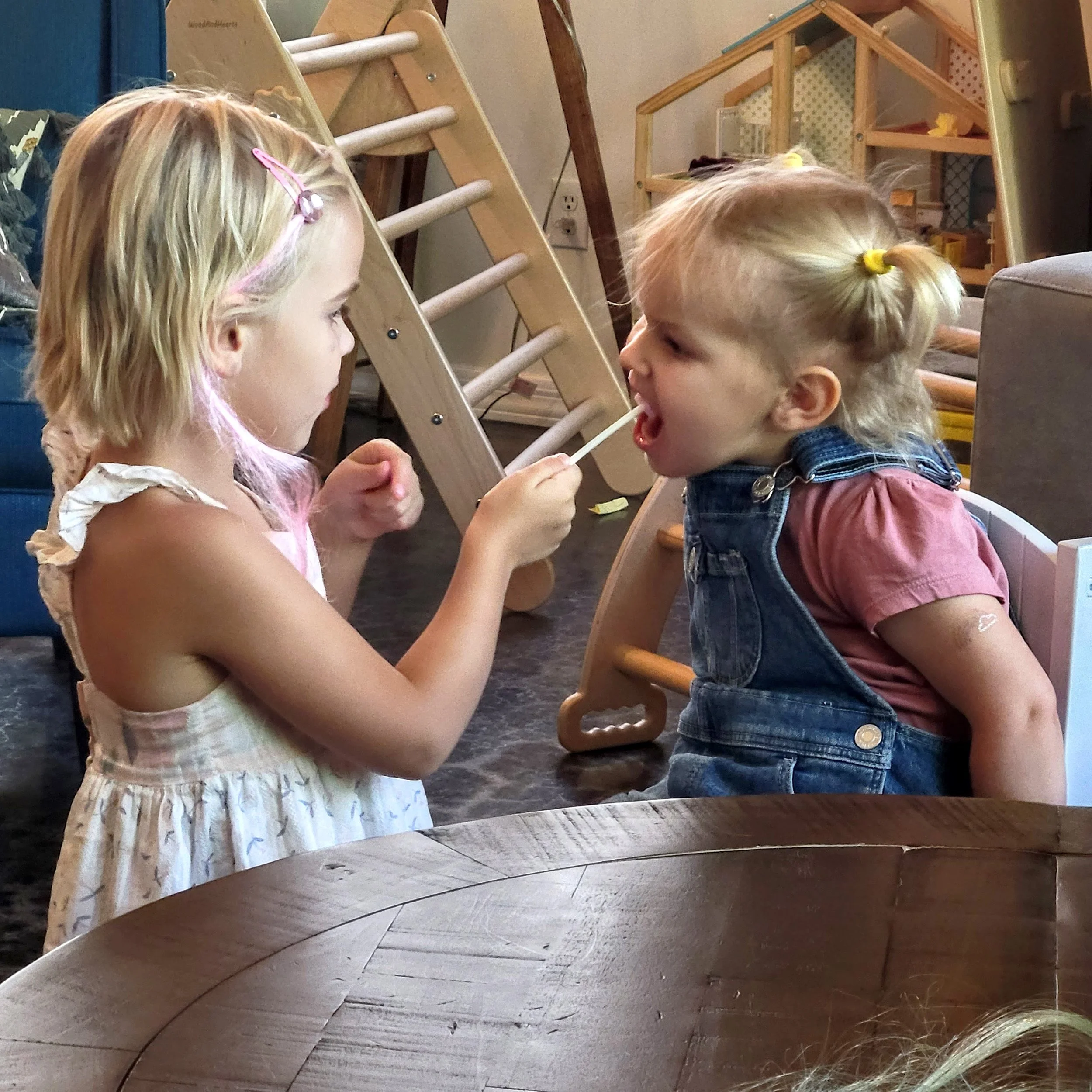
Orofacial Myofunctional Therapy helps with:
Mouth breathing
Snoring
Articulation
Tongue thrust
Difficulty chewing or swallowing
Orthodontic concerns
Tongue ties
BREATHE • EAT • SLEEP • TALK •
BREATHE • EAT • SLEEP • TALK •
For Adults
Relief from Chronic Tension, TMJ, and Poor Sleep
Orofacial Myofunctional Therapy helps with:
Mouth breathing
Snoring
Articulation
Tongue thrust
Difficulty chewing or swallowing
TMJ
Postural Alignment
Signs It’s Time to Explore Myofunctional Therapy
Instead of viewing these as separate, unrelated issues, we look at how your tongue, jaw, and facial muscles are working together.
-
Persistent mouth breathing (day or night)
Frequent snoring, restless sleep, or chronic tiredness
Open mouth resting posture (lips apart)
-
TMJ pain, jaw popping, or clicking
Daytime teeth clenching or nighttime grinding
Facial fatigue or effortful speech
-
Tongue thrust or swallowing with cheek/lip tension
Slow, messy, or anxious eating patterns
Frequent choking on liquids or solids
-
History of tongue or lip ties
Orthodontic relapse or narrow dental arches
Lingual lisps or difficulty producing /s, z, t, d, l, n/
Muscles don't work in isolation.
The Bridge Between Muscle & Tension: MYO + CFT
If physical restriction or tension exists in the head, neck, or mouth, muscles cannot easily adopt new habits.
That’s why we often combine Myofunctional Therapy (MYO) with Craniosacral Fascial Therapy (CFT). CFT releases tight fascial strain throughout the body, allowing your tongue and jaw to move freely. Once that tension is lifted, MYO exercises retrain those muscles for lasting, comfortable results.
“We can’t thank you enough for all that you’ve done for Julie. Most importantly, thanks for showing us the potential in her and giving us so much hope. There are many who can do your job, but not with so much compassion, dedication and sincerity. Karen and I agree, from all the doctors and specialist we’ve dealt with, you’ve stood out to us, and have made the most significant impression and are our favorite health care provider. You’ll always succeed as long as you stay who your are!”
Getting Started is Simple
Step 1:
Free Inquiry Call
Tell us what’s going on and ask any initial questions.
Step 2:
Comprehensive Evaluation
We evaluate whole-body function and build a plan.
Step 3:
Begin Therapy
Receive personalized, compassionate care designed to help you thrive.
FAQs
-
Orofacial myofunctional disorders (OMDs) are patterns involving oral and orofacial musculature that interfere with normal growth, development, or function of orofacial structures, or call attention to themselves (Mason, n.d.A). OMDs can be found in children, adolescents, and adults. OMDs can co-occur with a variety of speech and swallowing disorders. OMD may reflect the interplay of learned behaviors, physical/structural variables, genetic and environmental factors (Maspero, Prevedello, Giannini, Galbiati, & Farronato, 2014).
-
Myofunctional therapy is a treatment modality that uses neuromuscular re-education of the lips, tongue, jaw, and face to optimize the way we Breathe, Eat, Sleep, and Talk. Through simple, targeted exercises, and home practice based on individual needs, this type of therapy can help with: habits like thumb sucking, tongue thrust, and mouth breathing; while also supporting clearer speech, better eating (chewing and swallowing), improved sleep, and overall long-term wellness for both children and adults. The main treatment goals are: correct tongue and lip rest posture, nasal breathing, correct swallow patterns, and correct speech placement/ clarity. This treatment is specifically designed for children with the cognition and fine motor abilities of at least a 5 year old child.
-
Myofunctional therapy includes individualized exercises to help the muscles of the mouth/ face function to the BEST of their ability and to correct improper function of the tongue and facial muscles. It addresses the areas of breathing, eating, sleeping, and talking. Therapy is a non-invasive, low-risk way to treat ailments such as: tongue thrust, forward resting tongue posture (between or against teeth), speech sound errors, open mouth posture, oral phase dysphasia, snoring/ sleep apnea, thumb/ finger sucking habits, temporomandibular joint dysfunction, and stability of orthodontic treatment. This type of therapy is designed for individuals 4-5 years old and up (it is never too late to help improve function).
-
We swallow about 400-500 times per day while awake, about 200-300 more times while eating/ drinking, and during sleep about once per minute or less (about 50-100 swallows). The WAY we swallow matters; our tongue is a strong muscle and can shape the way our face grows and develops. Watch these videos for visuals on swallow patterns.
-
Watch this video to see the impacts of mouth breathing and how we can support you.
-
No! We can do a whole lot more than just help with speech. Speech Language Pathologists work in several work settings including: schools, hospitals, rehab facilities, nursing facilities, home health, early intervention, private medical practices, home health, community centers, research/ academia, corporate/ business settings, nonprofits and advocacy groups.
We can also work in a variety of specialized areas, including but not limited to: speech sounds (articulation and phonological disorders, Childhood Apraxia of Speech), stuttering/ fluency, voice, receptive/ expressive language, social communication, literacy and reading disorders, Augmentative and Alternative Communication (AAC), Feeding & swallowing, airway and breathing concerns, myofunctional therapy, cognitive-communication disorders, executive functioning, hearing loss, Autism Spectrum Disorders, craniofacial differences/ cleft palate, accent modification, and public speaking/ voice performance, etc.
-
At Breathe Eat Sleep Talk, we are an out-of-network provider with all insurance companies. Because we take a holistic approach and incorporate multiple treatment modalities, we are not able to bill insurance or provide documentation for reimbursement. Our services are wellness-based, with progress measured through both patient and family feedback as well as functional assessments by our speech-language pathologists. All sessions are private pay, with payment due on or before the day of service. Reach out today to review our intake packet and learn more.
-
Yes. Reach out today for our free consult about getting started.
Looking to book a 1:1 consult with Jeannie on a specific topic? Let us know in your inquiry form, and we can book an in-depth consult instead!
-
Younger children and infants can definitely benefit from similar methodology and intervention strategies used in myo; however, for children under 5 (as young as infants), therapy is more appropriately defined as feeding therapy. Please seek help from an SLP or OT specifically trained in feeding therapy for these ages! (All BEST therapists are SLPs also trained in this type of therapy in addition to myofunctional therapy)
-
Myofunctional therapy is an individualized therapy program, based on your symptoms and needs. Generally, we recommend starting therapy once per week or every other week to help establish muscle memory and address your needs. Home practice is recommended, daily, while in therapy to help promote best outcomes. The amount of sessions really depends on the individual, we’re happy to discuss your case with you during the evaluation.

Our Goals in Myofunctional Therapy
Nasal Breathing
Breathing through the nose has many benefits. By nature, humans are designed to breathe through their noses day and night, from birth. Nasal breathing promotes healthy airway function which filters, warms, and humidifies air for better overall health and sleep quality.
Proper tongue rest posture
FREEZE your tongue right now, where is it resting? Is it touching any teeth? Is it on the bottom or top of your mouth? The correct tongue rest posture is against the maxillary palate, which supports airway health, jaw growth, and stability of orthodontic treatment.
Correct Speech sounds
When the muscles of the face, jaw, lips, and tongue are optimally functioning, speech clarity and accuracy is improved. Up to 80% of children with speech sound errors also have oral motor dysfunction; which can be helped with myofunctional therapy.
Lip sealed
At rest, the lips should be comfortably closed without effort. This should be day and night, lips should open for talking, eating, and drinking. Correct lip seal is part of proper oral rest posture, preventing mouth breathing and helping maintain dental and facial development.
Correct swallow pattern
Did you know we swallow 400-500 times per day?! Proper chewing and swallowing is important for protecting teeth alignment and digestion. Our faces are shaped by our tongues and they way our tongues move.
Breathing is the bridge between our conscious and unconscious, guiding us from stress to calm. When we breathe deeply and intentionally, we activate the body’s rest and digest mode, fostering healing and restoration from within.
Ready to Help Your Family Be Their B.E.S.T.?
Take the first step.
Book a call and get the answers you’ve been looking for.
It’s time for better sleep, easier feeding, and clearer speech.